Epoxy Flooring in Skokie, Ground Open and Built to Last

Garage, basement and commercial floors with a moisture test, a written scope and a named product line before any price is final.

Skokie Epoxy Flooring has spent 20+ years installing epoxy flooring in Skokie, IL, along with polyaspartic coatings, polished concrete, basement floor epoxy and the commercial and industrial floors that labs, kitchens and shops depend on. Every job starts at the concrete itself: we grind or shot blast the slab open, map its cracks and test its moisture before a coating is chosen.

Most floors we see are garage and basement slabs that have already been painted, patched or sealed at least once. That history decides what a new coating can do, so our written proposal names the product line, the number of coats and the finished thickness, and it says plainly when a slab needs repair before it should be coated at all.

Commercial clients get the same discipline on a larger scale, from metallic and flake finishes in showrooms to static-dissipative floors, urethane cement in kitchens and heavy-duty epoxy under forklifts. Phasing, cure times and chemical exposure are planned around how the building actually runs.

Get Your Free Quote

Fast response • No obligation

So we can reach you about your request.

So we can send you a confirmation after you submit this inquiry form.

  • 20+ Years on Concrete
  • Moisture Tested First
  • Free Written Estimates

What we do

Our Services

Epoxy, polyaspartic and polished concrete floors in Skokie, IL

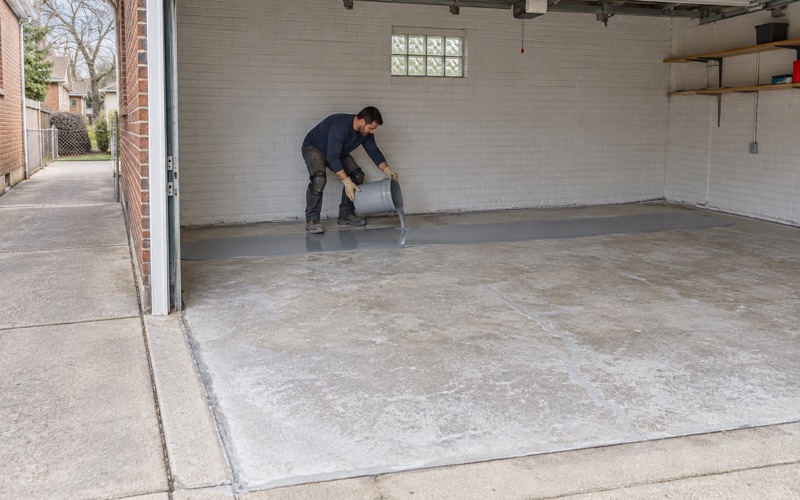
Gray epoxy base coat poured in a ribbon onto the ground slab of a detached Skokie garage.

Epoxy Garage Floor

Ground, moisture-tested epoxy garage floors with flake or solid finishes and topcoats that stand up to winter salt and hot tires.

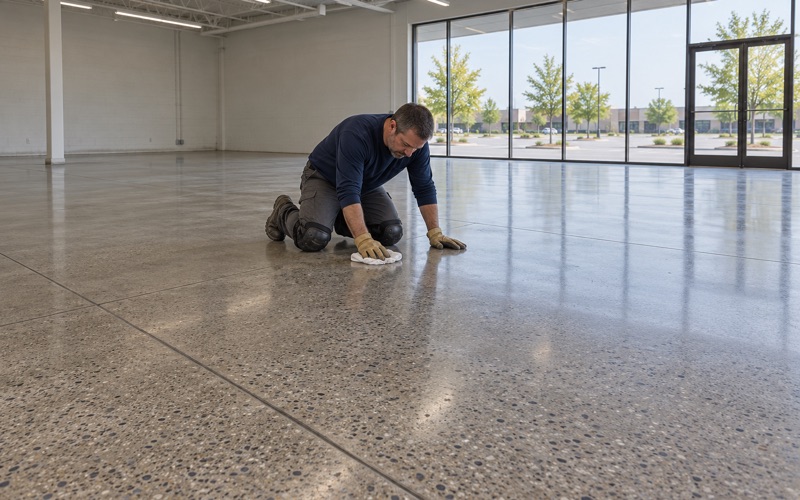
A new polished concrete floor in a Skokie retail space, a small patch wiped clean to read the sheen.

Polished Concrete Floors

Diamond-ground, densified and polished concrete floors for homes, retail spaces and shops, with cream, salt-and-pepper or full aggregate finishes.

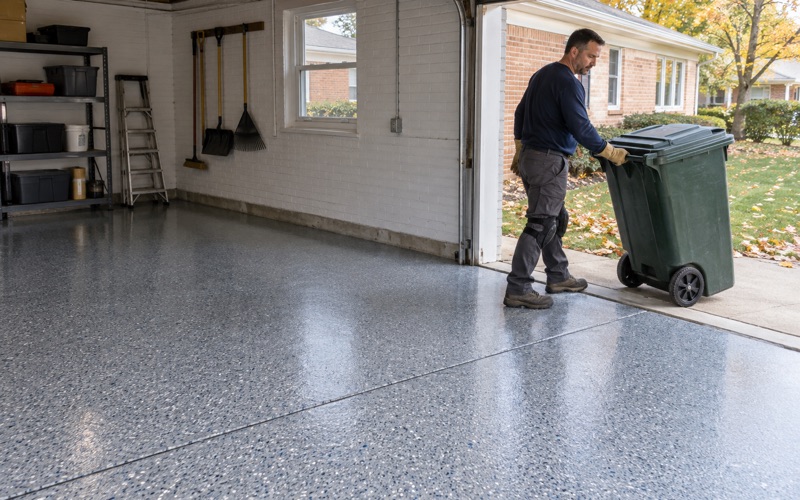
A wheeled garbage cart rolled back into a Skokie detached garage onto its same-day polyaspartic flake floor.

Polyaspartic Floor Coating

Fast-curing, UV-stable polyaspartic floor coatings over ground, moisture-tested concrete, for garages, basements and busy commercial floors.

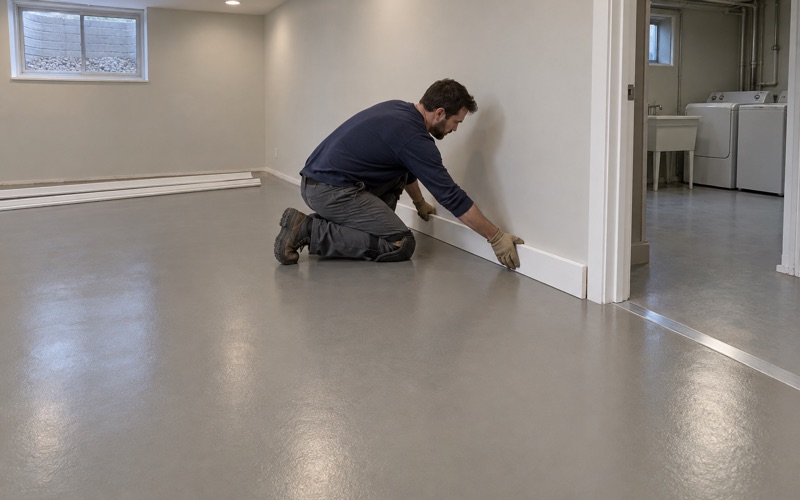
Baseboard set back along the wall above a new gray epoxy floor in a finished Skokie basement.

Basement Floor Epoxy

Moisture-tested basement floor epoxy for laundry rooms, workshops and finished lower levels, detailed around sumps, drains and overhead sewers.

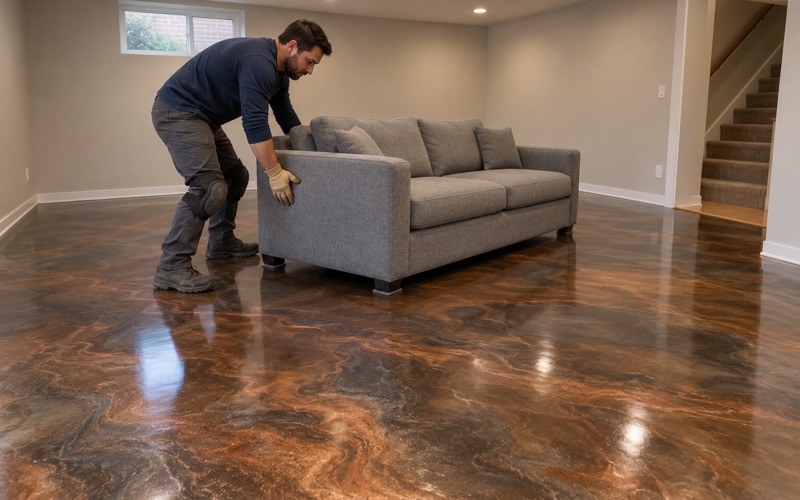
A sofa slid back onto a cured bronze and charcoal metallic epoxy floor in a Skokie basement rec room.

Metallic Epoxy Floor

Marbled metallic epoxy floors installed over ground, tested concrete for finished basements, showrooms, salons and offices.

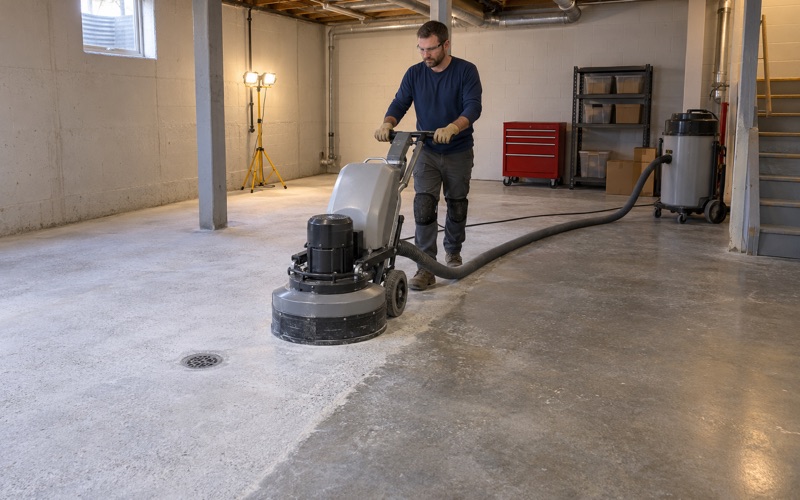
A walk-behind planetary grinder opening the surface of a Skokie basement slab, a vacuum hose running to the extractor.

Concrete Grinding

Diamond grinding and shot blasting that strips old coatings and opens concrete to the right surface profile, with vacuum dust capture.

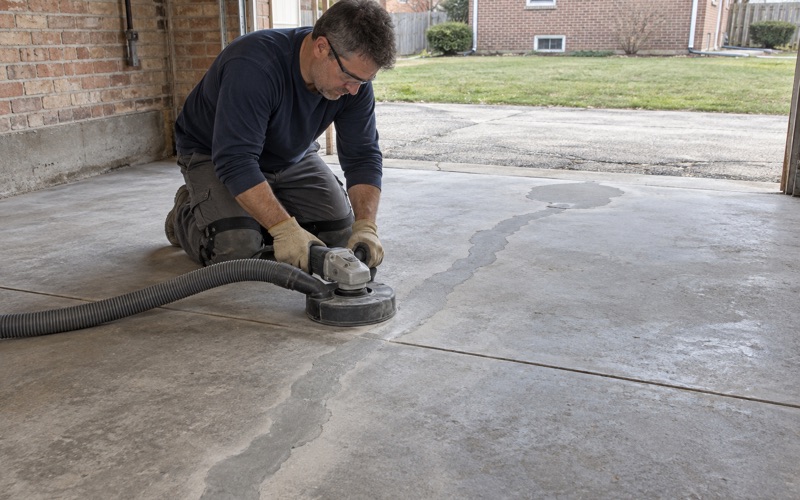
A crack repair in an old Skokie garage slab ground flush with a shrouded grinder before coating.

Concrete Floor Repair

Crack, spall, pitting and joint repair for garage, basement and commercial slabs, done right before a coating goes down.

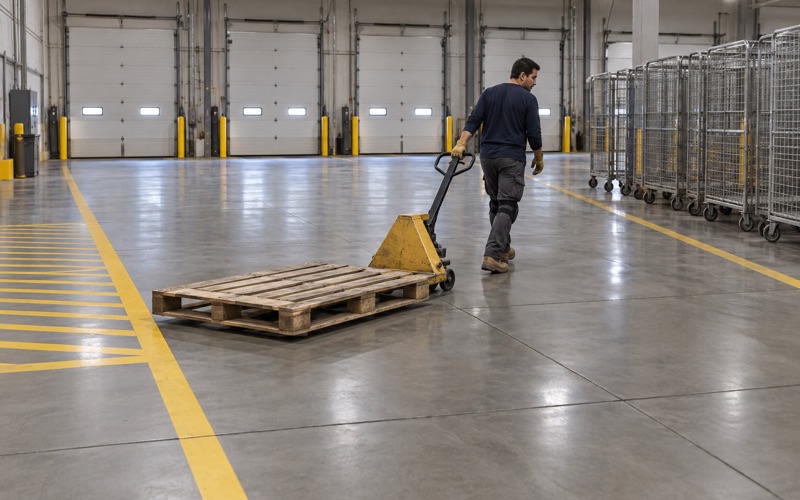
An empty pallet drawn across a coated delivery-station floor in Skokie, yellow walkway lines alongside.

Commercial Epoxy Flooring

Resinous floors for labs, clinics, retail, offices and shops, matched to each room's chemicals and traffic and installed around opening hours.

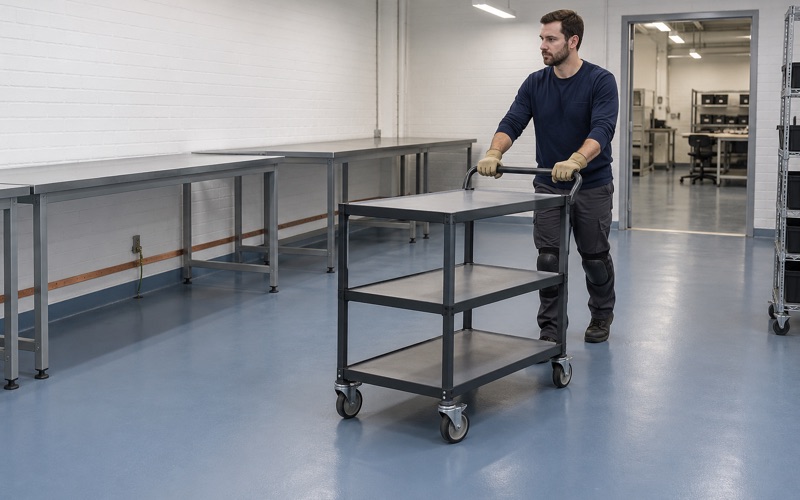
A static-safe cart rolled across a grounded static-dissipative floor in a Skokie electronics assembly room.

ESD Flooring

Static-dissipative and conductive epoxy floors for electronics work, labs and server rooms, grounded and resistance-tested after install.

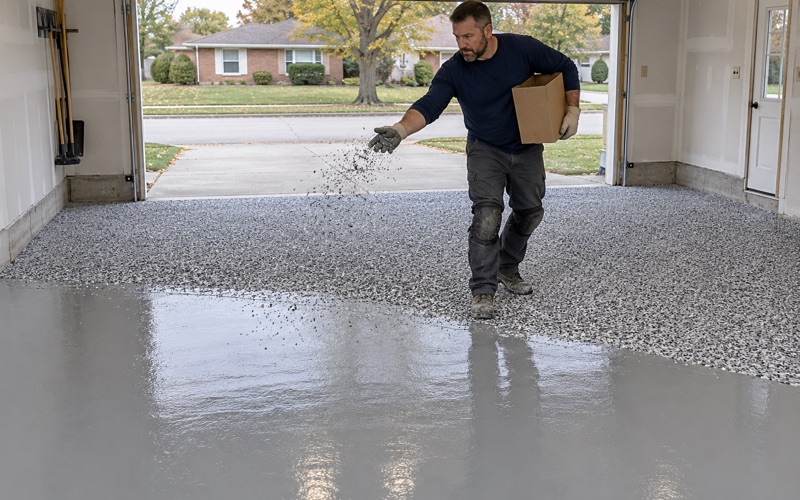
Gray, black and white flake broadcast mid-throw over a wet base coat in an attached Skokie garage.

Flake Epoxy Floor

Vinyl flake epoxy floors in custom blends and chip sizes, built over ground concrete and sealed with a tough clear topcoat.

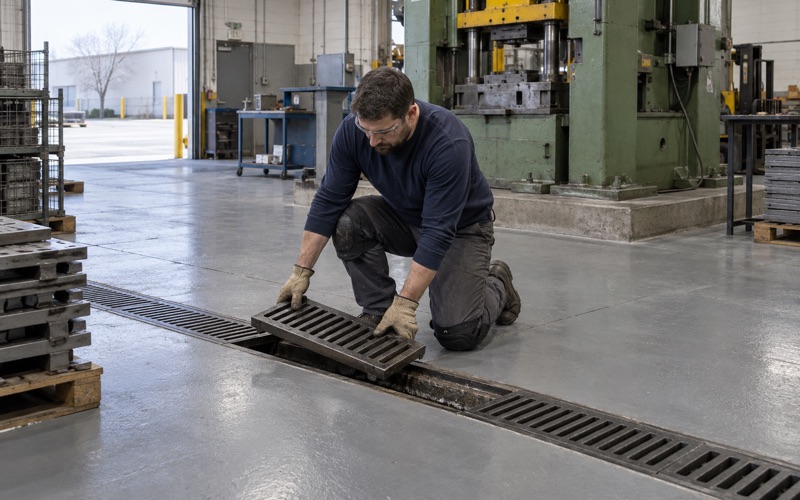
A heavy steel trench drain grate lowered back into its frame in a coated Skokie manufacturing floor.

Industrial Epoxy Flooring

Heavy-duty epoxy, novolac and urethane cement floors for plants, warehouses and shops, installed around production schedules.

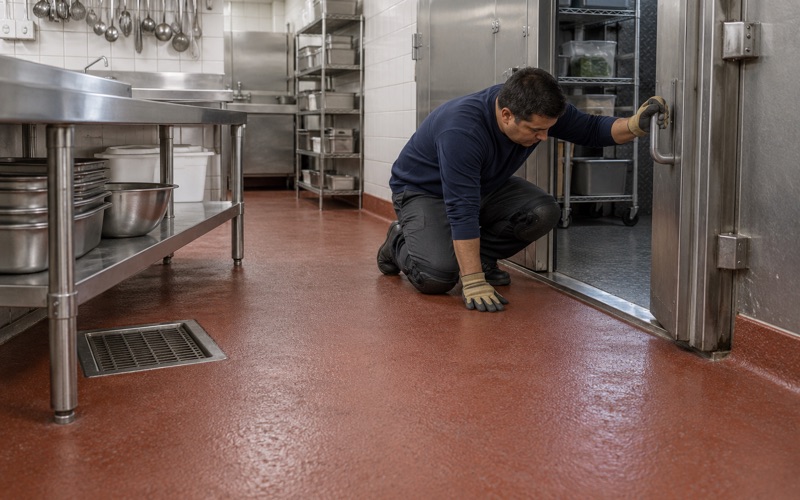
A quarry-red urethane cement floor in a Skokie restaurant kitchen running into the walk-in cooler threshold.

Commercial Kitchen Flooring

Urethane cement and resin floors for restaurant and institutional kitchens, built for grease, hot water and daily washdown.

Two Decades on Northern Illinois Concrete

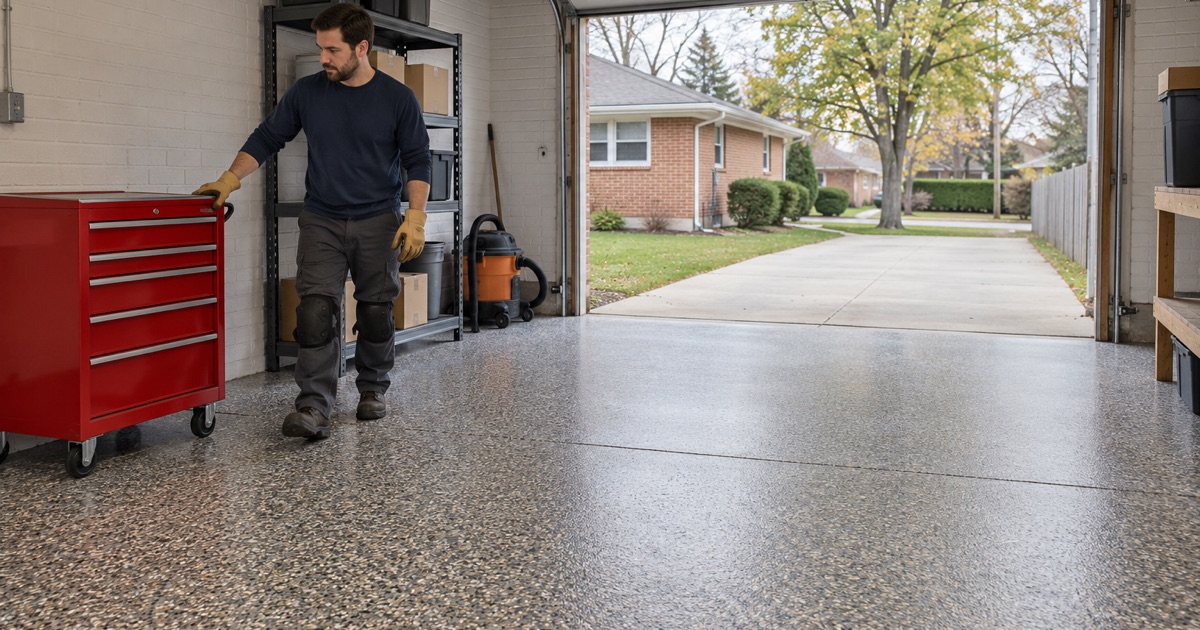
A rolling tool chest wheeled back into a detached Skokie garage onto its new gray and tan flake floor.

20+ Years of Epoxy and Concrete Floor Work

Skokie Epoxy Flooring has more than 20 years in the trade, which means we have watched plenty of coatings fail and learned what caused each one. Almost every failure traces back to prep, moisture or the wrong product for the exposure, and those are the three things we check before quoting.

Why Choose Skokie Epoxy Flooring

Ground Open, Never Etched

Every slab is opened mechanically with a diamond grinder or shot blaster to a measured ICRI concrete surface profile, so the epoxy locks into clean, porous concrete. Acid etching leaves residue and a shallow, uneven profile, and it is the shortcut behind many peeling garage floors.

Moisture Tested Before Pricing

No price is final until the slab has been tested for moisture, whether it is a basement floor over clay or a detached garage slab with nothing beneath it. Moisture is the first thing a warranty excludes, so we would rather find it before the coating goes down than explain it after.

Checkable Written Scope

Our proposal lists the product line, how many coats go down and the finished thickness in mils. You can hold the finished floor against that paper, rather than trusting a single line reading “epoxy floor” that could mean one thin coat or a full broadcast system.

Built Around Skokie Basements

Nearly every house in Skokie has a basement on a combined sewer, so basement floors are coated around the sump pit, floor drain and overhead sewer line, never sealed over them. A coating is never sold here as flood protection, waterproofing or radon reduction, because it is none of those.

Village Rules Checked First

Illinois has no state flooring license, so we check the contractor registration and insurance rules of each village, Skokie’s annual registration included, before booking. Home jobs over the state threshold get a written contract and the Home Repair: Know Your Consumer Rights pamphlet before grinding starts.

Garage Floors, Detached and Attached

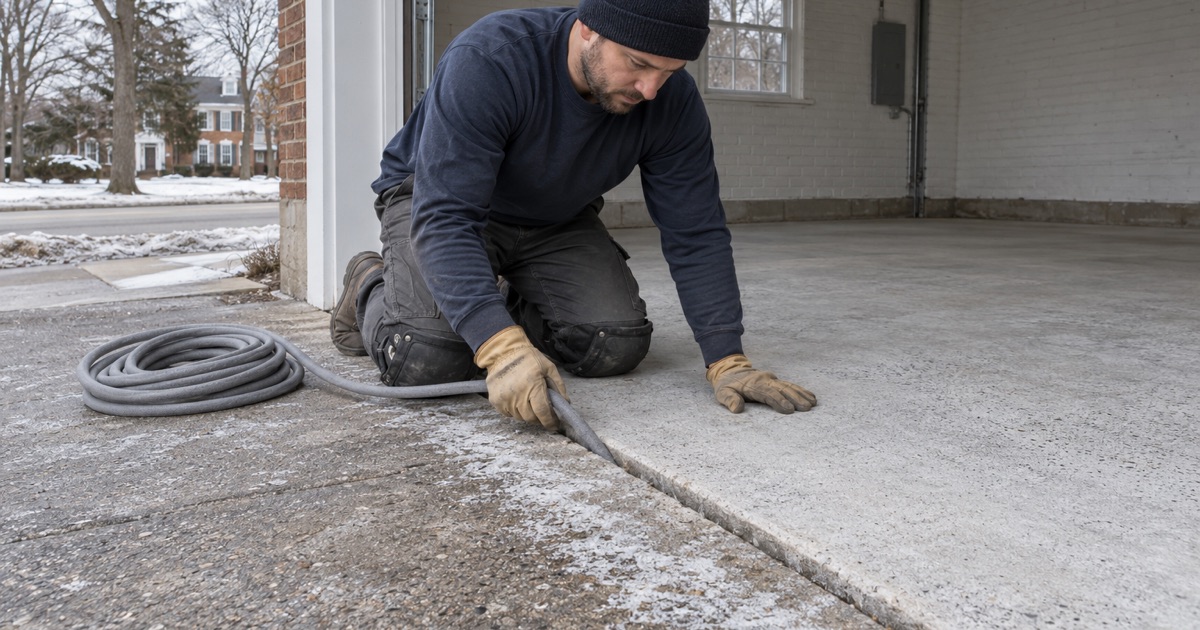
Foam backer rod pressed into the joint between a detached Skokie garage slab and its salt-stained driveway apron.

How an Epoxy Garage Floor Job Runs

A garage job starts with a walk-through, a moisture test and a crack and spall map, followed by a written proposal. On install day the slab is ground and vacuumed, repairs are filled, then the base coat, any flake broadcast and the topcoat go down in sequence. You park only after the cure time the product’s chart and the slab temperature allow.

Detached Garage Slabs and Cold Cures

Many Skokie houses have a detached garage out back, and that slab is unheated through the winter. Epoxy cures slowly and can stay soft or blush when the slab is cold, so in deep winter we tell the owner of an unheated garage to wait for warmer weather rather than gamble on a cure that will not finish.

Attached Garages and Keeping Dust Out of the House

An attached garage shares a door, and sometimes air, with the living space. We run vacuum dust extraction on every grinder, seal the house door during grinding and coating, and schedule the strongest-smelling steps so the family is not breathing them overnight.

Grinding Through Sealer and Old Paint

A coating rolled over sealer, paint or a failing older coating bonds only as well as that old layer does. Diamond grinding removes those layers and opens the concrete itself, so the new floor bonds to the slab rather than to whatever was rolled on years ago.

Moisture Testing a Garage Slab With No Vapor Retarder

The model code lets garage slabs skip the vapor retarder required under living space (IRC R506.2.3), so many garage floors have nothing below them to slow ground moisture. We test with an ASTM F2170 relative humidity probe or ASTM F1869 calcium chloride kit, because a slab that looks dry can still push enough vapor to lift a coating.

Cracks, Spalls and Pitting in the Slab

Hairline cracks, salt pitting and spalled edges are routed, cleaned and filled before coating, and moving cracks are treated differently from dormant ones. When a slab is heaving, badly settled or crumbling across large areas, we say it needs replacement rather than a coating that will crack along with it.

Winter Brine and Rock Salt on Bare Concrete

Calcium chloride, rock salt and brine ride in on tires all winter, soak into bare concrete and help break down its surface through freeze and thaw. A sealed, seamless coating keeps that slush on top where it can be squeegeed out, and we pick systems rated to stand up to those deicers.

Hot Tire Pickup and Thin Coatings

A tire coming off a warm drive softens a thin or poorly bonded coating and can pull it up when the car parks. Hot tire pickup is most common with store-grade, water-based kits, which is why our garage systems use full-thickness base coats and a hard polyaspartic or polyurea topcoat.

DIY Kits Versus a Professional System

A hardware-store kit is usually a thin, water-based coat rolled over an etched or merely washed slab. A professional system starts with mechanical grinding and builds several coats of 100% solids epoxy and polyaspartic to a stated thickness, which is the difference between a floor that lasts and one that peels by the second winter.

What an Epoxy Garage Floor Costs

Garage floor pricing turns on square footage, the amount of grinding needed to remove old coatings, crack and spall repair, the moisture result and the system chosen. A flake system with a polyaspartic topcoat costs more than a single color coat, and we price after testing the slab rather than quoting blind.

What the Warranty Does Not Cover

Coating warranties nearly always exclude failures caused by moisture vapor or hydrostatic pressure from below the slab. We explain those exclusions before the job is sold and test the slab first, so the warranty you get means something on your particular floor.

Basement Floors, Sump Pits and Overhead Sewers

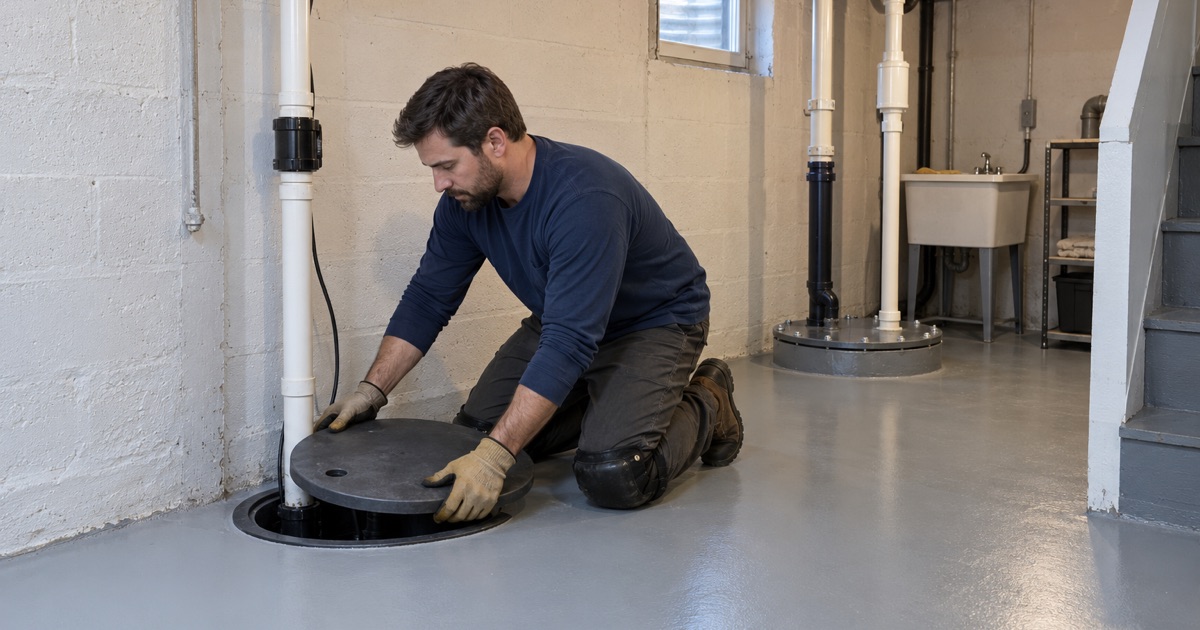
A coated Skokie basement floor around a sealed sump basin, its lid being set back on the rim beside the check-valve pipe.

Basement Floor Coatings Start With Moisture

A basement slab sits in contact with soil, so the first question is how much moisture it moves, not which color to pick. We test the slab before quoting, and the result decides whether a standard primer, a moisture-mitigation primer or no coating at all is the honest answer.

Old Basement Floors With Paint, Patches and Tile Glue

Mid-century basements often carry decades of floor paint, patching compound and black asbestos-era tile mastic. We identify what is on the floor before grinding, remove coatings mechanically and flag any suspect adhesive for testing, because a new coating is only as sound as the layer beneath it.

Combined Sewers, Overhead Lines and What a Coating Cannot Fix

Skokie sits on a combined sewer system that carries storm water and sewage together, and the village requires new connections to be made overhead and shares the cost of an overhead sewer conversion. A floor coating does nothing to stop a sewer backup, so we coat around the ejector pit and overhead plumbing and leave the backup question to the plumber.

Coating Around Sump Pits, Floor Drains and Drain Tile

Sump pits, floor drains and perimeter drain tile are how a basement manages water, and coating over them defeats that. We stop the coating at a clean edge around each pit lid and drain grate and keep inspection access open, so the system can still be serviced.

Hydrostatic Pressure Under a Dry-Looking Slab

Groundwater pressing up on a basement slab can push moisture through concrete that looks dry from above. A coating sealed over that pressure can blister and lift, which is why we test rather than judge a slab by how it looks on a dry afternoon.

What Efflorescence on the Floor Tells You

White, powdery deposits on a basement floor are efflorescence, mineral salts carried up by moisture moving through the concrete. They are a warning that water is moving, and they have to be ground off and the moisture measured before any coating can be expected to hold.

When a Moisture-Mitigation Primer Is Needed

When testing shows vapor above a standard primer’s limit but the slab is otherwise sound, a moisture-mitigation primer can hold that vapor back under the coating. It adds cost and a step, so we specify it only where the test result calls for it.

Coating After a Basement Takes on Water

After a flood or backup, the slab needs cleaning, disinfecting where sewage was involved and time to dry before any coating. We retest moisture after cleanup, because a slab that was underwater days ago is almost never ready to coat this week.

Laundry Rooms, Workshops and Home Gyms

A laundry room needs a floor that shrugs off detergent spills and a leaking washer, a workshop needs one that resists oil and dropped tools, and a home gym needs grip under sweaty shoes. We match the topcoat and texture to each room rather than putting one finish everywhere.

Not Radon Mitigation and Not Waterproofing

A floor coating is not a radon mitigation system, and in Illinois radon mitigation is licensed work through IEMA. Nor is a coating waterproofing; it will not stop liquid water entering a basement, and we never sell it as either.

Flake, Metallic and Polished Looks

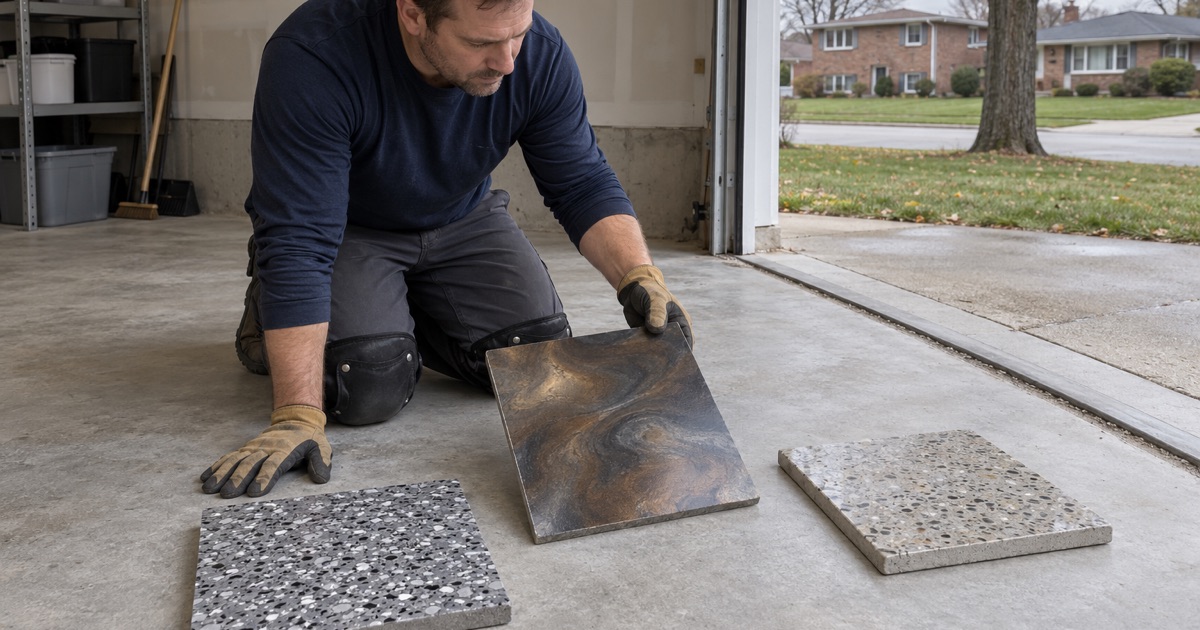
Three cured finish samples, flake, metallic and polished concrete, compared in daylight on a bare Skokie garage slab.

Vinyl Flake Blends and Chip Size

Vinyl flake broadcast into a wet base coat hides dust and small imperfections and adds texture underfoot. A full broadcast of large chips gives a terrazzo-like look, while a lighter broadcast of small chips lets more of the base color show through, and we bring samples so the choice is made in your light.

Metallic Epoxy Floors

Metallic epoxy uses mica pigments that swirl as the coating is worked, leaving a marbled, three-dimensional finish no two floors share. It needs a flat, well-ground slab, a skilled hand and a controlled room, because every roller mark and temperature change shows in the final pattern.

Polished Concrete and Aggregate Exposure

Polished concrete is ground in stages, densified with lithium silicate and polished to the sheen you choose. A light grind leaves a cream finish, while deeper grinding exposes salt-and-pepper or full aggregate, and how much stone shows depends on how the slab was originally poured.

Gloss, Satin or Matte Topcoats

High gloss looks dramatic but shows every dust mote and tire mark, while satin and matte topcoats hide everyday traffic better. We usually recommend satin for garages and busy commercial floors, and gloss where the floor is the showpiece.

Quartz Aggregate Broadcast Floors

Colored quartz aggregate broadcast into epoxy gives a floor color and slip resistance in a single step. Quartz systems are common in commercial kitchens, locker rooms and ramps, where a textured, durable finish matters more than a smooth one.

Solid Color Coatings

A solid color floor is the simplest, most affordable system and suits utility rooms, back-of-house spaces and floors that will be covered by equipment. It shows dust more than flake, but it is easy to clean and easy to recoat later.

Sunlight, UV and Ambering

Epoxy yellows, or ambers, under ultraviolet light, which matters on floors near garage doors, windows and storefronts. A polyaspartic or aliphatic urethane topcoat holds its color in sunlight, so we specify one wherever daylight reaches the floor.

Saw Cuts, Borders and Logos

Control joints, decorative saw-cut lines, colored borders and inlaid logos can turn a plain floor into something designed. We honor existing control joints rather than burying them, since a crack will follow the joint whether or not the coating does.

Labs, Food Plants, Clinics and Shop Floors

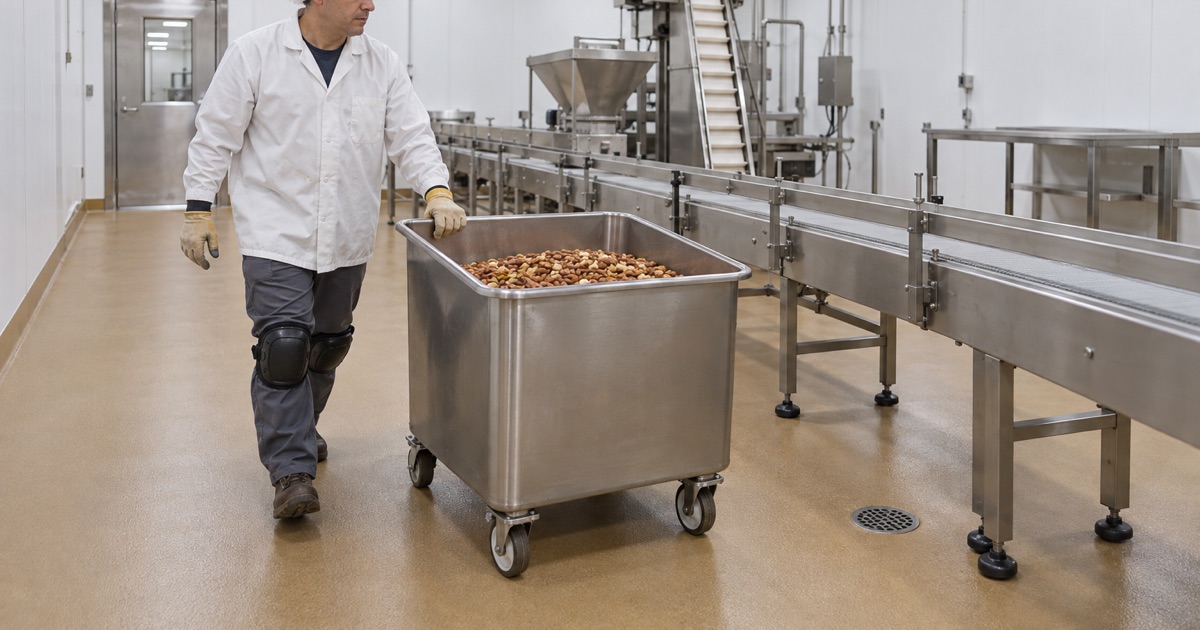
A coated food-plant packaging floor in Skokie, a wheeled stainless ingredient tote rolled along the conveyor line.

How Commercial Floor Work Differs

Commercial floors carry heavier loads, harsher chemicals and stricter downtime limits than a home garage. We start with the exposure list, the cleaning chemicals, the traffic and the schedule, and choose a resinous system for that list rather than a generic coating.

Laboratory Floors and Chemical Spills

Labs spill solvents, acids and bases, then clean with aggressive disinfectants. We specify chemical-resistant epoxy or novolac systems matched to what is actually used in the room, with integral cove base where spills need to be contained at the wall.

Clinic and Medical Office Floors

Hospital, clinic and medical office floors are cleaned with strong disinfectants every day, which softens and dulls the wrong coating. A seamless resinous floor with a chemical-resistant topcoat leaves no grout lines to harbor contamination and holds up to that daily cleaning.

Food Production Floors Under Washdown

Food plants hose floors daily and drop sugar, oils and acids that attack concrete. These floors need slope to drain, textured finishes for grip and systems built for thermal shock and washdown, which is where urethane cement and heavy-build epoxy earn their place.

Restaurant Kitchens and the Skokie Health Department

Restaurant floors in Skokie answer to the village’s own Health Department, which asks for floors that are durable, non-absorbent, grease resistant and easily cleanable, graded to drains where they are hosed. A resin floor is submitted on the finish schedule for the department to accept, and we coordinate that rather than assume it.

Urethane Cement for Hot Water and Cleaners

Urethane cement tolerates hot water, steam cleaning, grease and thermal shock that would soften or crack a standard epoxy. It is the system we recommend for commercial kitchens, breweries and food lines where floors see boiling water and harsh degreasers.

Metal Finishing and Plating Shops

Plating and metal finishing shops handle acids, caustics and rinse water that eat through ordinary concrete. These floors need chemical-resistant resins, trenches and sumps that are coated as part of the system, and joints detailed so nothing seeps into the slab.

Warehouse and Delivery Station Floors

Forklift and pallet jack wheel loads grind and gouge weak coatings, and turning wheels scuff the surface. Warehouse and delivery station floors get high-build epoxy over well-prepared concrete, with joint repair, because a failing joint is where a heavy wheel starts tearing the floor apart.

Static-Dissipative and ESD Floors

Electronics assembly areas and server rooms need floors that bleed static charge to ground within a set resistance range. ESD and static-dissipative epoxy systems use conductive primers and grounding points, and the floor is tested after installation to confirm it reads within that range.

Illinois VOC Limits on Floor Coatings

Illinois caps volatile organic compounds in floor and industrial maintenance coatings under 35 Ill. Adm. Code Part 223 Subpart C, alongside the federal rule at 40 CFR 59 Subpart D. Those limits bind the person applying the coating, not only the manufacturer, so we choose products that comply in the Chicago ozone nonattainment area.

Night and Weekend Floor Installs

Many businesses cannot close for several days while a floor cures. We phase work by area, schedule grinding and coating overnight or over weekends, and use fast-curing polyaspartic systems where a section must reopen the next morning.

Areas We Serve

Skokie Epoxy Flooring provides epoxy-flooring throughout the greater Skokie area, with the same crews and the same standards on every job.

Good to know

Frequently Asked Questions

How long does an epoxy floor take from start to finish?

A typical two-car garage is ground, repaired and coated over one to two working days, depending on the system and the slab. Foot traffic usually follows within a day and vehicles a few days later, but the real schedule comes from slab temperature and the product's cure chart, which we put in writing.

Do I need a permit to coat my floor in Skokie?

The village lists flooring among projects that do not need a permit, so a coating alone usually goes ahead without one. Replacing a slab, adding drain tile or changing sump discharge is different work, and those jobs go through Village of Skokie Building and Zoning first.

Is Skokie Epoxy Flooring licensed?

Illinois issues no state license for flooring or coating contractors. Many villages, including Skokie, run their own annual contractor registration and insurance rules, so we confirm what the village where your floor sits requires before the job is booked.

What is the difference between epoxy and polyaspartic?

Epoxy builds thickness and bonds hard to properly profiled concrete, but it cures slowly and ambers in sunlight. Polyaspartic cures much faster, holds its color under ultraviolet light, and is often used as the topcoat over an epoxy base so a floor gets the strengths of both.

Can you coat a basement floor that gets damp?

Sometimes, but only after we know why it gets damp and how much vapor the slab is moving. A moisture test sets the answer: a slab within the product's limits gets a standard primer, a slab above it may need a moisture-mitigation primer, and a floor that takes on liquid water needs the water problem solved first.

How long will an epoxy garage floor last?

A ground, multi-coat system on a sound, dry slab commonly lasts many years under normal parking, salt and foot traffic. The things that shorten it are skipped prep, moisture under the slab, thin coats and topcoats that cannot handle hot tires, which is why the proposal names each layer and its thickness.

Do you work on commercial floors that cannot shut down?

Yes. Labs, clinics, kitchens and shops are phased by area and scheduled around operating hours, including nights and weekends, with fast-cure products used where a section has to reopen the next morning.

Will grinding make a mess in my house?

Our grinders and shot blasters run with vacuum dust extraction at the machine, so most dust is captured as it is made. On attached garages and basements we also seal off doorways and keep the shared door closed during grinding and coating.

What does an epoxy floor cost?

Price depends on square footage, slab condition, the amount of crack and spall repair, the moisture result and the system chosen. A flake garage floor, a metallic basement floor and a urethane cement kitchen floor are priced very differently, so we quote after seeing and testing the slab rather than by phone.

Ready to Get Started?

Request a free quote today and we'll get back to you fast.