
Skokie Epoxy Flooring installs basement floor epoxy in Skokie, IL, with regular work in surrounding cities including Lincolnwood, Winnetka, Norridge, Schiller Park and River Grove. In more than 20 years of coating basement slabs, the lesson has been consistent: the moisture question comes first, and the color question comes last.
Skokie is a basement village. Cook County Assessor records show the large majority of houses here with a full or partial basement, much of the housing dates from the 1950s and 1960s, and those slabs sit on soil and beside drainage systems that matter as much as the floor itself.
A good basement epoxy floor turns a dusty, stained slab into a clean, bright surface for a laundry room, workshop, gym or storage space. A bad one blisters, peels or traps moisture where it does damage, and the difference is almost always made before the first coat is mixed.
Moisture Comes First
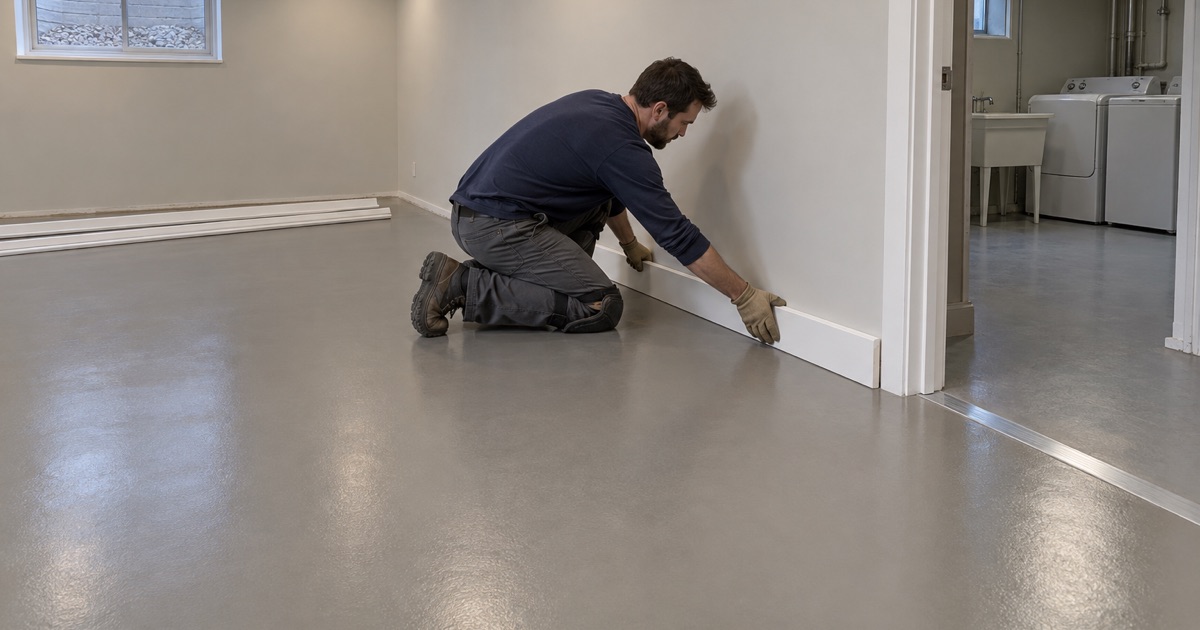
Testing Every Basement Slab
Every basement floor we quote is tested, because a slab that looks dry can still be moving enough water vapor to lift a coating. We use ASTM F2170 in-situ relative humidity probes or ASTM F1869 calcium chloride tests, and sometimes an ASTM D4263 plastic sheet test as a quick first read.
The result goes into the written scope before the price is final. If the slab reads within the coating’s limits, a standard primer works. If it reads higher, we specify a moisture-mitigation primer, and if water is actively coming in, we stop and say so.
Hydrostatic Pressure and Efflorescence
Groundwater pressing up against the underside of a basement slab is hydrostatic pressure, and it can push moisture and dissolved salts through the concrete. Those salts show up as white efflorescence on the surface, and they are a sign that a coating sealed over the floor may be pushed off from below.
We grind off efflorescence, test again and talk honestly about whether the slab needs drainage work before it is coated. A coating cannot hold back water that a drain tile system or a working sump pump should be handling.
When a Moisture-Mitigation Primer Fits
A moisture-mitigation primer is a specialized epoxy designed to hold back higher vapor emissions under the finish coats. It adds material cost and a step to the job, but on a sound slab that tests high, it is often the difference between a floor that lasts and one that blisters.
We specify it only where testing calls for it, and we explain its limits. It manages vapor; it does not stop flowing water, and it will not fix a slab that floods.
Drains, Sumps and Sewers
Combined Sewers and Overhead Plumbing
Skokie runs on a combined sewer system that carries storm water and sewage together, and the village requires new connections to be made overhead under its amended IRC R306.3. Many basements here have an ejector pit and overhead sewer line, and the village has a cost-share program for overhead sewer conversions.
None of that is something a floor coating can replace. We work around the overhead plumbing and ejector pit, and we are clear that an epoxy floor will not prevent or survive a sewer backup unharmed.
Sump Pits, Floor Drains and Drain Tile
Sump pits and perimeter drain tile keep groundwater away from the slab, and floor drains carry water off the floor. We coat to a clean, sealed edge around each pit lid and drain grate and keep inspection access clear.
Where a floor drain sits in a low spot, we can slope a repair toward it before coating so water does not puddle. We never seal over a drain, a cleanout or a sump lid.
Replaced Slabs and Drainage Work
If a basement slab has to be replaced, the village’s amended code calls for a CA7 stone base under the new slab, and sump discharge must include an accessible full-flow check valve. That is permit work, and a new slab needs time to cure before any coating goes on.
We can point you to the right trades for that work and come back to coat once the concrete is ready. A new basement slab is tested for moisture like any other before it is coated, since fresh concrete gives off a great deal of water as it cures.
Preparing an Older Basement Floor
Paint, Patches and Old Tile Adhesive
Mid-century basement floors often carry layers of floor paint, patches and black tile mastic from old vinyl or asphalt tile. We identify what is there before grinding and flag any suspect mastic for testing, because some older adhesives require special handling.
Once cleared, the floor is ground with diamond tooling to open the concrete. Our grinders run with vacuum dust extraction at the machine, so the dust does not spread into the furnace, the laundry or the rest of the house.
Cracks and Uneven Spots
Basement slabs develop shrinkage cracks, settled spots near drains and rough patches from old repairs. We map them, fill them with compatible repair materials and level low areas where they would show through the finished floor.
A crack that is still moving will reflect through any coating over time. We tell you which cracks are stable and which may reappear, so expectations are set before the job begins.
Systems for Basement Rooms
Laundry Rooms and Utility Spaces
Laundry rooms see detergent spills, water from leaking washers and heavy appliances. A solid color or flake epoxy with a slip-resistant topcoat cleans easily and handles occasional water without soaking it up.
Utility areas around the furnace and water heater get the same coating, cut neatly around equipment pads rather than under them. We leave clearances where a plumber or HVAC technician will need to work, so future service does not mean cutting into a new floor.
Workshops and Home Gyms
Workshops need a floor that resists oil, solvents and dropped tools, while home gyms need grip under shoes and resistance to dropped weights. We pair a durable epoxy base with the right topcoat and texture for each use, and recommend rubber mats in lifting areas.
A light-colored floor in a workshop also brightens a dim basement noticeably, because the coating reflects the overhead light back up. Many clients are surprised how much easier it becomes to find a dropped screw on a light gray flake floor.
Finished Lower Levels
For finished family rooms, metallic epoxy or a clean flake finish gives a bright floor that tolerates basement conditions better than carpet. Area rugs add warmth without trapping moisture across the whole floor.
If the lower level may flood or back up in a severe storm, a coated slab is also far easier to clean and dry than carpet and pad. That is not flood protection, but it does mean less material to tear out if water ever gets in.
Cost, Scope and Paperwork
What Moves the Price of a Basement Floor
Basement pricing depends on the floor area, how many layers of old paint and adhesive must be removed, the number of cracks and low spots, and the moisture result. A slab that needs a moisture-mitigation primer costs more than one that tests dry, and a metallic finish costs more than a solid color.
Our written proposal lists the product line, the number of coats and the finished thickness, so you can compare quotes on the same terms. Stairs, landings and cove details are priced separately where they apply.
Written Contracts and Consumer Rights
Home jobs over the state threshold get a written contract under the Illinois Home Repair and Remodeling Act, along with the Home Repair: Know Your Consumer Rights pamphlet, before any grinding starts. We also confirm the contractor registration and insurance rules of the village where the house sits, since Illinois issues no state flooring license.
What a Basement Coating Is Not
An epoxy floor is not waterproofing, not flood protection and not radon mitigation, and we never sell it as any of those. In Illinois, radon mitigation is licensed through IEMA, and water problems belong to drainage and plumbing contractors. A coating is the finish that goes on once those questions are answered.
- 20+ Years on Concrete
- Moisture Tested First
- Free Written Estimates