Skokie Epoxy Flooring installs metallic epoxy floors in Skokie, IL, and travels to surrounding cities including Lincolnwood, Winnetka, Norridge, Schiller Park and River Grove for decorative floor work. Our 20+ years of grinding and coating concrete matter most on metallic floors, because the finish shows every flaw in the slab and every hesitation in the installer’s hands.
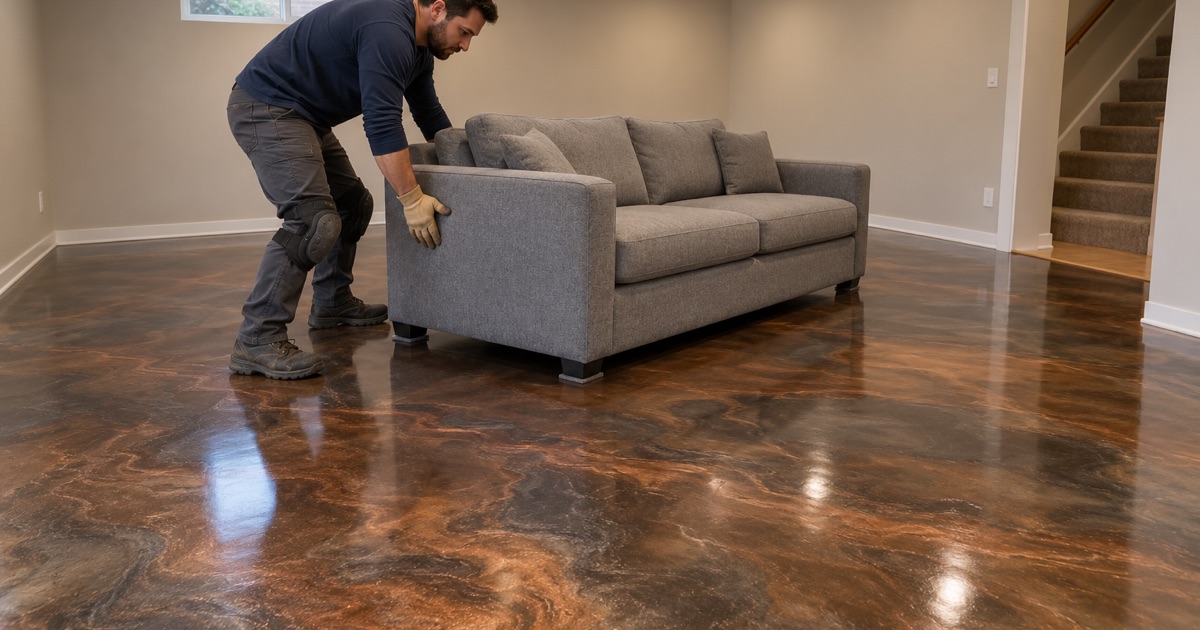
A metallic epoxy floor uses mica-based metallic pigments suspended in clear epoxy. As the coating is rolled, spread and worked, the pigment moves and settles, leaving swirls, ripples and depth that look like polished stone, flowing water or molten metal.
That look is why clients choose it for finished basements, showrooms, salons, offices and garages that double as display space. It is also why the work demands a flat, well-prepared slab, a controlled environment and a crew experienced with how metallic coatings behave.
What Makes a Metallic Floor Work
A Flat, Ground Slab
Metallic epoxy is self-leveling and thin enough to pool in any low spot, so dips and ridges in the slab show up as color changes in the finished floor. We grind the slab with diamond tooling, fill cracks and pits, and level low areas before the base coat.
Old paint, sealers and adhesive are removed completely. A metallic coat over a patchy surface will telegraph every patch, so preparation sets the ceiling for how good the floor can look.
A Dark Base Coat
Most metallic floors start with a pigmented epoxy base coat, often black, charcoal or a deep tone matched to the metallic color. The base provides a uniform backdrop so the metallic layer reads evenly and has depth.
The base coat also seals the slab and gives the decorative coat a consistent surface to flow over. Skipping it to save time is a common reason metallic floors look blotchy.
Controlled Temperature and Humidity
Metallic coatings are sensitive to slab temperature, air movement and the dew point at the surface. Cold slabs slow flow and cure, drafts create unwanted patterns, and condensation leaves cloudy spots or amine blush.
We check conditions before every coat and schedule around them. In unheated spaces during winter, that sometimes means waiting for warmer weather, which we tell you up front rather than risk the floor.
Moisture Testing Under a Decorative Floor
Testing Before the Price Is Final
A metallic floor is an investment in appearance, and moisture coming up through the slab can blister or cloud it. Every slab is tested with ASTM F2170 relative humidity probes or ASTM F1869 calcium chloride tests before we finalize the proposal.
On basement slabs that read high, a moisture-mitigation primer goes under the metallic system. Where water is actively entering the space, we recommend fixing that problem first and coating later.
What the Warranty Leaves Out
Coating warranties exclude damage from moisture vapor and hydrostatic pressure, and decorative floors are no exception. We explain that before you commit, which is the reason the test happens first.
Designing the Look
Choosing Colors and Effects
Metallic pigments come in silvers, golds, coppers, bronzes, blues, greens and many custom blends. One color gives a calmer, stone-like look, while two or three colors worked together create bolder, more dramatic movement.
We prepare sample boards in your chosen colors and view them in the room’s own light. Lighting changes metallic floors dramatically, so a color that looks right in a showroom photo may read very differently under basement fluorescents.
Techniques That Shape the Pattern
The installer controls the pattern through how the coating is spread and worked. Rolling, troweling, back-rolling, spraying solvent and using a heat gun or leaf blower all create different cells, lines and swirls.
We agree on the general style beforehand, from soft marble to strong ripples, and follow that plan across the floor. Because it is hand-worked, the result is always one of a kind.
Gloss, Topcoats and Wear
A metallic floor is usually finished with a clear topcoat that adds depth and protects the decorative layer. High gloss shows the metallic effect best, while a satin topcoat hides scuffs and dust better.
For rooms with sunlight, we use a UV-stable polyaspartic or aliphatic urethane topcoat to prevent ambering. In higher-traffic spaces, a fine aggregate can be added for grip.
Our Step-by-Step Metallic Epoxy Floor Process
Step 1: Assessment, Moisture Test and Samples
We inspect the slab, map cracks, coatings and low spots, and run a moisture test. Sample boards in your chosen colors are made and viewed in the room, and the written proposal lists every coat, the product line and the finished thickness.
Step 2: Grinding, Repairs and Leveling
The slab is ground with diamond tooling to open the surface and remove old coatings, with dust captured at the machine by vacuum. Cracks, pits and low areas are filled and ground flush, because the metallic coat will reveal any unevenness left behind.
Step 3: Primer and Base Coat
A penetrating epoxy primer seals the concrete, followed by a pigmented base coat that sets the backdrop color. On slabs that tested high for moisture, a moisture-mitigation primer takes the place of a standard one.
Step 4: The Metallic Coat
The metallic epoxy is mixed, poured and worked across the floor in one continuous session so no seams or hard edges form. This is the step where technique creates the pattern, and the crew works it until the agreed effect is reached.
Step 5: Topcoat and Cure
Once the metallic layer cures, a clear topcoat adds protection and sets the sheen. We confirm cure against the product chart and slab temperature before furniture goes back, and hand over care instructions in writing.
Caring for a Metallic Floor
Daily Cleaning
Dust mop often, since grit acts like sandpaper on a glossy surface. Damp mop with a pH-neutral cleaner, and avoid citrus, vinegar and harsh solvents that can dull the topcoat over time.
Protecting the Finish
Felt pads under chair and table legs, mats at entries and care when moving heavy furniture keep scratches to a minimum. Light surface scratches in the topcoat can be buffed or the topcoat renewed years later without disturbing the metallic layer beneath.
Where Metallic Epoxy Fits Best
Finished Basements and Living Spaces
Many Skokie homes have basements that serve as family rooms, home offices or entertainment spaces. A metallic floor gives those rooms a striking, easy-to-clean surface that holds up better than carpet in a below-grade space.
As with any basement coating, the floor is detailed around sump pits, drains and the overhead sewer line, never sealed over them. The decorative finish stops at a clean edge so those systems stay serviceable.
Showrooms, Salons and Offices
Commercial clients use metallic floors to make a space memorable. Showrooms, salons, boutiques and office lobbies benefit from a seamless floor that cleans easily and makes a strong first impression.
We schedule commercial installs around business hours, including nights and weekends, and plan the phasing so the space can reopen on time. Because the metallic coat must go down in one continuous session, each phase is sized to what the crew can finish without a break.
Garages Used as Display Space
Some clients want a garage that showcases a car collection. Metallic floors can work there with the right topcoat, but they show tire marks and scratches more than flake floors, so we discuss trade-offs before recommending it.
A garage slab also brings its own conditions: winter salt, a missing vapor retarder under many older floors and, in a detached garage, no heat. Those are tested and planned for the same way they would be under a flake system, and a cold detached garage is scheduled for warmer months rather than poured in January.
Planning and Pricing a Metallic Floor
What Affects the Cost
Metallic floors cost more than solid color or flake systems because they involve more coats, more material and more skilled labor. Slab condition matters too: heavy grinding to remove old coatings, extensive crack repair and leveling all add time before the decorative work can start.
The number of colors, the complexity of the pattern and the topcoat chosen also affect price. The written proposal breaks those out, so you can see what each choice adds.
Furniture, Timing and Access
The room has to be empty for the duration of the job, and foot traffic must stay off between coats so dust and footprints do not end up in the finish. We set out the schedule in advance, including when furniture can return and when heavy items can be rolled back in.
In a home, we plan for the household’s access to the rest of the house, the furnace and the laundry. In a business, we phase around opening hours so the space is closed as briefly as possible.
- 20+ Years on Concrete
- Moisture Tested First
- Free Written Estimates