
Skokie Epoxy Flooring installs flake epoxy floors in Skokie, IL, serving surrounding cities including Lincolnwood, Winnetka, Norridge, Schiller Park and River Grove. For more than 20 years we have built flake floors in garages, basements and commercial spaces, and the system’s appeal is simple: it looks good, hides everyday dirt and adds texture underfoot.
A flake floor is built in layers. A pigmented epoxy or polyaspartic base coat goes onto ground, repaired concrete, vinyl flakes are broadcast into it while wet, and the excess is scraped and vacuumed before one or more clear topcoats seal everything in. The result is a seamless surface with depth and grip that a plain painted floor cannot match.
The chips are the visible part, but the floor’s lifespan is set by what happens before them. Our flake floors start with diamond grinding, crack and spall repair and a moisture test, and the written proposal names the product line, the number of coats and the finished thickness.
Choosing a Flake Look
Blends and Colors
Flake blends range from quiet grays and tans to high-contrast mixes with black, white and accent colors. Light blends brighten a dim garage or basement, while darker blends hide tire marks and stains better.
We bring sample boards in several blends and lay them on your floor so you see them in your own lighting. Colors that look one way in a catalog photo often read quite differently under garage or basement lights.
Chip Size
Flakes come in sizes from small specks to large chips. Small flakes create a fine, granite-like texture, while larger chips give a bolder, more decorative look and cover the base more quickly.
Chip size also affects texture. Larger chips create a slightly rougher surface under the topcoat, which some clients like for grip and others smooth out with an additional clear coat.
Full Versus Partial Broadcast
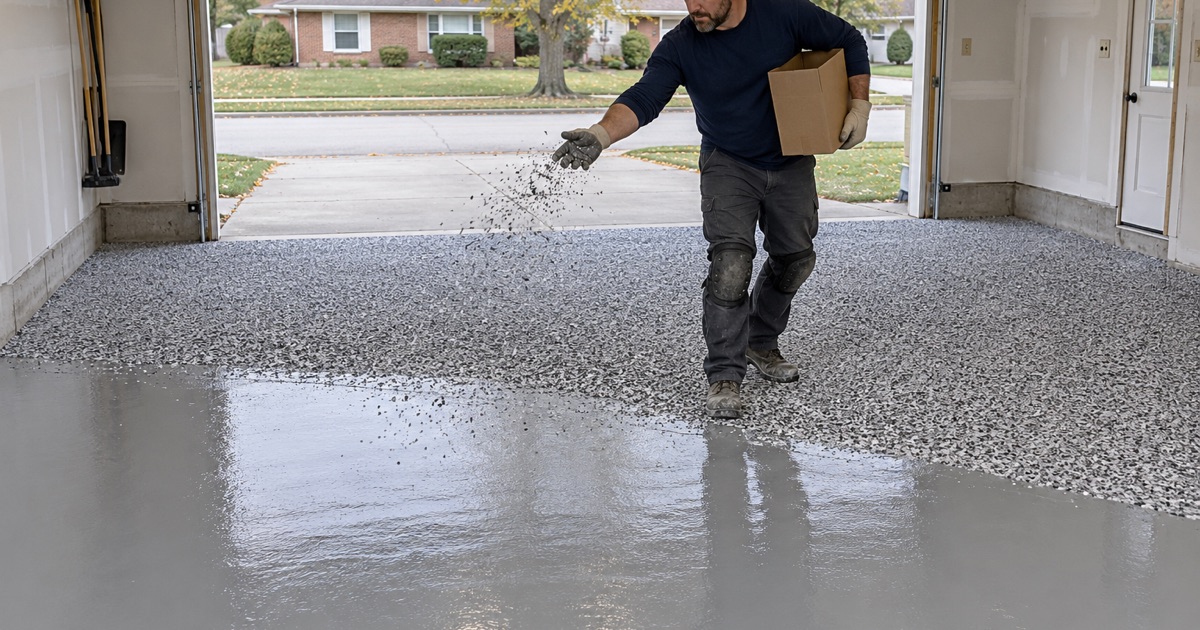
In a full broadcast, flakes are thrown into the base coat until it can hold no more, completely covering the base color. This creates the classic terrazzo-like garage floor and gives the most texture and durability.
In a partial broadcast, flakes are scattered more lightly so the base color shows through. It costs less in material and creates a more subtle look, but it shows dirt a bit more than a full broadcast.
How a Flake Floor Is Built
Ground, Repaired Concrete
Every flake floor starts with mechanical grinding or shot blasting to a measured surface profile, never acid etching. Old paint and sealers are removed, cracks and spalls are filled, and the door apron on garages is rebuilt where salt has scaled it. Grinding dust is captured at the machine with a vacuum, so it stays out of the house and is not rinsed toward a floor drain.
Base Coat and Broadcast
The base coat is applied in sections, and flakes are broadcast into each section while the coating is still wet. Once the base cures, loose flakes are scraped off and vacuumed so the surface is ready for the clear coat.
A 100% solids epoxy base builds thickness and bond economically, while a polyaspartic base speeds the job and works better in cooler conditions. The choice depends on the slab, the schedule and the space.
Clear Topcoat
The clear topcoat locks the flakes in place and provides the wearing surface. On garage floors, we prefer a polyaspartic or polyurea topcoat because it resists hot tire pickup, chemicals and abrasion, and it does not yellow in sunlight.
Topcoat texture can be adjusted, from smooth and glossy to slightly textured for grip. Most garage clients choose a satin finish that hides scuffs and offers good traction when the floor is wet.
Moisture, Cure and Warranty
Testing Before the Price Is Final
A flake floor sealed over a damp slab can blister and lift, and moisture is the first exclusion in nearly every coating warranty. We test with an ASTM F2170 relative humidity probe or an ASTM F1869 calcium chloride kit before the price is final, and the result is written into the scope.
Garage slabs deserve special attention here. Many were poured without a vapor retarder under the IRC R506.2.3 garage exception, so moisture from the ground can move freely into the concrete.
Cure Times and Temperature
Cure schedules depend on the slab temperature and the dew point spread at the surface, not the calendar. A cold slab slows epoxy cure and can cause amine blush, a waxy film that interferes with the next coat.
We read the conditions before each coat and give you written times for foot traffic and vehicles. In deep winter, an unheated detached garage is usually told to wait for spring.
What the Warranty Covers
We explain the manufacturer’s coverage and our workmanship terms before the job is sold, starting with what they exclude. Moisture from below, impact damage and chemicals the system was not designed for are common exclusions, and knowing them up front helps you care for the floor.
Where Flake Floors Work Best
Garages
Flake floors are the most popular garage system for good reason. They hide dust and debris, resist the brine and rock salt that come in on tires all winter, and clean up easily with a squeegee and mop.
In detached garages without heat, we schedule installs for when the slab is warm enough and above the dew point, rather than coat in deep winter and risk a poor cure.
Basements, Laundry Rooms and Workshops
In basements, a flake floor brightens the space and handles spills, water from washing machines and heavy foot traffic. As with all basement work, the slab is moisture tested and the coating is detailed around sump pits, floor drains and overhead sewer lines rather than over them.
Commercial Spaces
Locker rooms, break rooms, retail back rooms and light commercial spaces use flake floors for their durability and easy cleaning. Commercial flake systems can include integral cove bases and textured topcoats for wet areas.
In businesses that must stay open, we phase flake floors by area and use polyaspartic bases and topcoats where a section has to return to service the next morning. The schedule and cure times are agreed in writing before work begins.
- 20+ Years on Concrete
- Moisture Tested First
- Free Written Estimates